
PDO THREADS AFTER MEDICAL WEIGHT LOSS INJECTIONS
Summary
Rapid fat loss from GLP-1 medications like semaglutide (Ozempic, Wegovy) and tirzepatide (Mounjaro, Zepbound) can leave skin without enough time to adapt, resulting in laxity in the face, jaw, neck, and cheeks. PDO threads are a non-surgical treatment that addresses this in two ways: they physically lift and reposition sagging tissue immediately, and they trigger the body to build new collagen over the following months. At Vanity Skin Bar in Baltimore, PDO threads are commonly used on the lower face, jowls, neck, and mid-cheek area for patients recovering from medical weight loss, often alongside dermal fillers, neurotoxins, or microneedling. Results typically last up to 18 months, with the initial lift visible immediately and full collagen building developing over three to six months.
Why Does Rapid Weight Loss From GLP-1 Medications Affect Skin Firmness?
GLP-1 receptor agonists like semaglutide and tirzepatide reduce body weight by suppressing appetite and slowing gastric emptying. For many patients, the results are significant, but the speed of fat loss can create a separate aesthetic challenge. When fat leaves the face quickly, the skin that once had volume beneath it no longer has the structural support it relied on.
This is not a flaw in the medication or the body. Skin has natural elasticity, but that elasticity is limited. Collagen and elastin fibers, the proteins responsible for skin's strength and ability to spring back into place, can stretch and recover when change happens gradually. When weight loss is rapid, particularly in patients in their 30s, 40s, or older, those fibers often do not snap back the same way. This can leave skin looking deflated, loose, or sagging, especially in the lower face, jowl area, under the chin, and along the neck.
Why Does Skin Laxity From Weight Loss Happen Faster Than Expected?
Fat in the face functions as scaffolding beneath the skin. The cheeks, temples, and lower face each contain distinct fat compartments that contribute to facial shape and skin support. Since GLP-1 medications reduce overall body fat, the face is often one of the first areas to show visible change. When those fat compartments deflate, the skin above them loses its foundational structure and begins to descend or wrinkle.
Several factors affect how noticeable this becomes. Age plays a major role, since collagen production slows significantly after the mid-20s and continues declining afterward. Sun damage history, genetics, hydration levels, and the speed of weight loss all contribute as well. Even gradual, lifestyle-driven weight loss can cause some degree of skin laxity, but rapid pharmacological weight loss tends to compress that timeline considerably.
What Are PDO Threads and How Do They Work?
PDO stands for polydioxanone, the same material used in dissolvable surgical sutures, and PDO threads are fine, dissolvable filaments inserted just beneath the skin's surface using a needle or cannula. Once in place, they work in two ways.
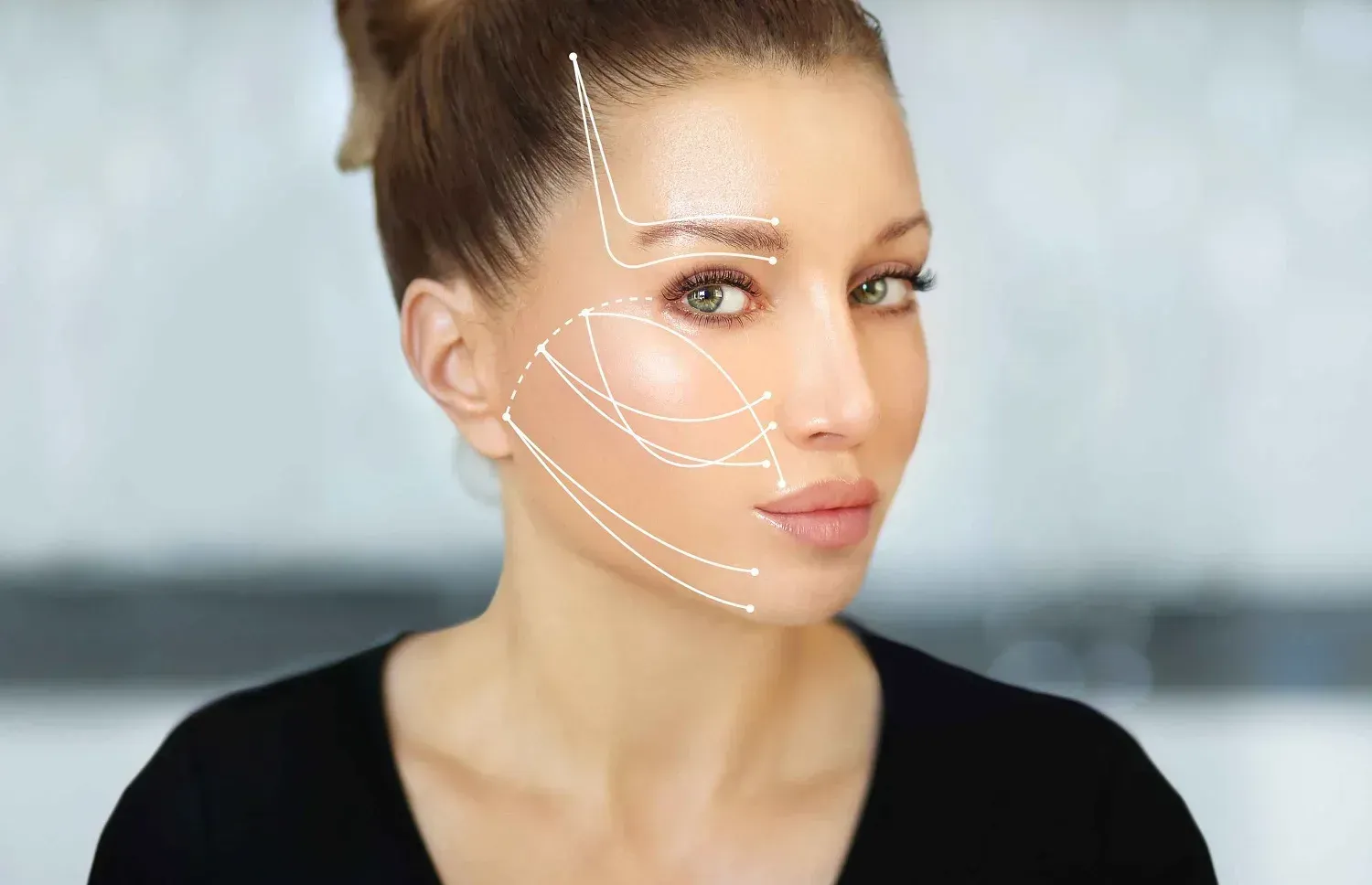
The first effect is mechanical. Barbed or molded threads anchor into surrounding tissue, allowing a provider to lift and reposition sagging areas immediately, which is why PDO threads are often described as a non-surgical lift. Many patients see a noticeable improvement in the position of the cheeks, jowls, and jawline on the same day as treatment.
The second effect is biological. As the threads dissolve over several months, the body recognizes them as a foreign material and begins a controlled healing response. Fibroblasts, the cells responsible for collagen production, are recruited to the treatment area. Over the following three to six months, new collagen forms along the thread's pathway, creating denser, firmer tissue where the skin once felt thin or loose. The thread material eventually disappears, but the collagen it stimulated remains in place.
Where Do PDO Threads Work Best After Weight Loss?
Treatment areas depend on each patient's anatomy, age, and how much weight was lost, but several zones consistently respond well to PDO thread treatment in medical weight loss patients. The lower face and jowls are among the most commonly treated areas, since thread lifting can restore a cleaner jawline contour when fat descends from the mid-cheek. The neck and under-chin area also benefit frequently, since lax skin in this region can create the appearance of heaviness even after fat has already been lost. The mid-cheek and brow area may also need attention when volume loss causes the brows to drop or the cheeks to appear flat.
Smooth threads, a type of PDO thread that does not lift but focuses purely on collagen stimulation, are also used in areas like the cheeks, temples, and neck when the goal is improving skin quality and thickness rather than repositioning tissue.
Can PDO Threads Be Combined With Other Treatments?
PDO threads work well as a standalone treatment, but they also integrate into a broader treatment plan for many medical weight loss patients. Dermal fillers from the Juvederm or Revanesse collections restore targeted volume in the cheeks, temples, and lips. Neurotoxins like Botox relax overlying muscle tension so lifted tissue stays in position. Microneedling improves overall skin texture and thickness, supporting the lift achieved with threads. Treatment plans at Vanity Skin Bar are built in stages rather than overdoing any single treatment, so the combination reflects what looks natural and lasts for each patient.
What Should You Expect During and After a PDO Thread Treatment?
A PDO thread treatment at Vanity Skin Bar begins with a consultation to assess anatomy, understand goals, and determine which thread types and placement areas will produce the best outcome. Depending on the areas treated, a session typically takes between 30 and 45 minutes.
Immediately after treatment, mild swelling, bruising, or tightness in the treated area is common and typically resolves within one to two weeks. Most patients return to normal activity within a day or two, though strenuous exercise and certain facial movements are usually avoided for the first week.
Results build gradually. The initial lift is visible right away, while the full collagen building effect develops over three to six months. Results typically last up to 18 months, and many patients choose an annual maintenance treatment to sustain results over time.
Frequently Asked Questions
How soon after starting medical weight loss injections can I get PDO threads?
There is no strict waiting period, but it is generally recommended to wait until weight has stabilized or slowed considerably before pursuing lifting treatments. Patients who are six months or more into their weight loss journey and noticing stable laxity are typically good candidates, since a still-changing face makes it harder to achieve a long-lasting result with threads.
Will PDO threads replace the volume I lost?
Threads are primarily a lifting and firming treatment, not a volumizing one. They restore the position of tissue that has descended and stimulate collagen that adds density over time, but significant fat loss in the cheeks, temples, or under the eyes may call for combining threads with a dermal filler to address both lift and volume together.
Is PDO thread treatment painful?
Most patients describe the sensation as mild pressure or a brief pinching feeling during insertion. Any post-treatment discomfort is usually mild and manageable with over-the-counter pain relief.
How many PDO thread sessions will I need?
Many patients see meaningful results after a single session. Patients with more advanced laxity or multiple treatment areas may benefit from a follow-up session three to six months later as collagen continues building.
Are PDO threads safe for everyone?
PDO threads have a strong safety record and are suitable for most healthy adults, though they may not be appropriate for patients with certain autoimmune conditions, active skin infections in the treatment area, or those who are pregnant. A full health history review during consultation confirms candidacy.
At Vanity Skin Bar in Baltimore, PDO threads offer a non-surgical way to address skin laxity after medical weight loss, restoring both lift and long-term structure. To schedule a consultation, call (667) 344-8942 or visit VanitySkinBar.com.